
Idaho Supreme Court Affirms Lower Court Ruling to Dismiss Public Defense Case
October 28, 2026 2:30 pm
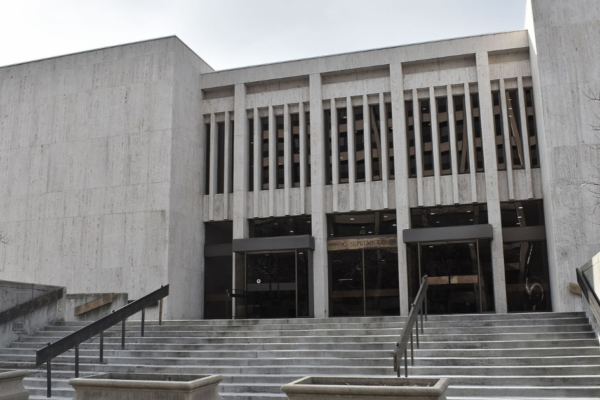
In a closely divided 3 to 2 decision, the Idaho Supreme Court today upheld a lower court’s decision to dismiss Tucker v. State of Idaho, a decade-long class-action lawsuit over the constitutionality of Idaho’s public defense system.
Justice Cynthia Meyer, dissenting with former Chief Justice Roger Burdick, pointed out that Idaho’s State Public Defender office has “[…] not yet been proven to resolve the serious deficiencies identified by appellants in the public defense system.” She noted “[…] to dismiss a case based on assurances of something different, results in closing the doors to courts of justice prematurely.”
“Idaho’s courts still have not fulfilled their responsibility to rule on the constitutionality of Idaho’s public defense system, which has remained in crisis for over 15 years now,” said Joe Cavanaugh, Hogan Lovells Cadwalader attorney who argued the recent appeal before the Idaho Supreme Court. “Our work is not done either, and we will continue to challenge Idaho’s unfair, underfunded system and its overworked public defenders. Idaho and its courts, legislature, and governor have plenty more work to before they have met their constitutional promises.”
“This ruling is a disappointment for the thousands of Idahoans who deserve the chance to properly defend themselves in court,” said Paul Carlos Southwick, Legal Director at ACLU of Idaho. “Every single day, Idahoans are denied their constitutional right to legal representation because of the state’s persistent failure to fix chronic and widespread public defense issues. Idahoans who are accused of a crime are sitting in jail for months without access to a public defender, and some are even showing up to their court hearings without legal representation. We are evaluating the decision to determine next steps in our fight for a constitutional public defense system.”
This ruling comes after the ACLU appealed a February 2024 trial court decision dismissing the case. In the trial court ruling, the court said that “time will tell if the State will live up to the promises made or if those are mere empty promises.” In October of 2024, the state took full control of a restructured State Public Defender (SPD) system, moving from a county-led model to a statewide model. In December 2024, the ACLU filed an emergency motion urging the Idaho Supreme Court to intervene, providing documented proof that system-wide deficiencies continued and worsened after a disastrous rollout of the new SPD office in October 2024.
The longstanding lawsuit was originally filed in 2015. Plaintiffs are represented by the ACLU of Idaho, American Civil Liberties Union, Hogan Lovells Cadwalader, Wrest Collective, and Ali & Lockwood. The lawsuit demands that Idaho make changes to its public defense system so that defendants in need of state-provided legal representation can access it.
According to data from the Prison Policy Initiative, nearly half of the people in Idaho jails are not convicted of a crime. Research shows that barriers to accessing a public defender lead to lost wages and employment, harsher sentencing, and wrongful convictions.
Related Issues
Related Content

Tucker v. State of Idaho

ACLU files emergency motion asking court to intervene in State Public Defender disaster
Long-running Class Action Over Idaho’s Public Defense Crisis Heads to Idaho Supreme Court for Third Time
Stay Informed
Sign up to be the first to hear about how to take action.
By completing this form, I agree to receive occasional emails per the terms of the ACLU’s privacy statement.
By completing this form, I agree to receive occasional emails per the terms of the ACLU’s privacy statement.