Court Cases
Featured Cases
Sep 3, 2026
Jackson-Edney v. Labrador
Recent Update - 8/12/26
A court injunction is currently in place, blocking most of HB 752.
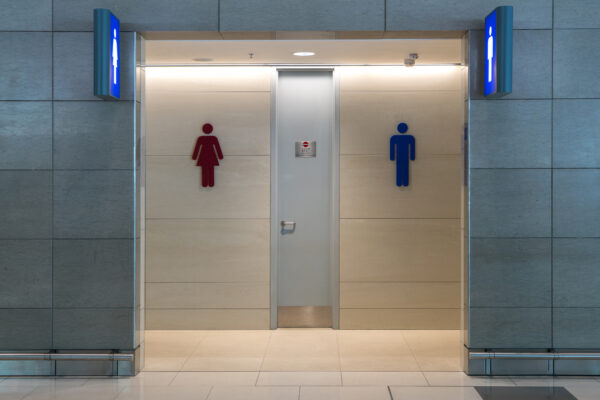
On June 16, 2026, a federal judge granted a request for a preliminary injunction and provisional class-action status. This means that HB 752 cannot force a trans person in Idaho to use a public restroom that does not match their gender identity.
Trans people in Idaho can use public restrooms consistent with their gender identity in the following scenarios:
Any single-user restrooms.
Any multi-user restrooms when a single-user restroom is unavailable on the same floor (unavailable means that a single-user restroom does not exist, is out of service or is occupied).
The only time the restroom portion of the law can be enforced is when a trans person uses a multi-user restroom when a single-user restroom is available on the same floor. Additionally, the injunction does not block the changing room portion of the law.
The State of Idaho is appealing the court's decision, but the injunction remains in place.
On July 16, 2026, the State of Idaho filed a notice of appeal for the court's preliminary injunction and provisional class-action status. This appeal does not impact the injunction at this time.
The opening brief for this lawsuit is due August 28, 2026*. The answering brief is due September 25, 2026*. The optional reply brief is due 21 days after the answering brief is served.
*Note that these dates are subject to change.
Visit our HB 752 Resource Hub for more information.
About the Lawsuit
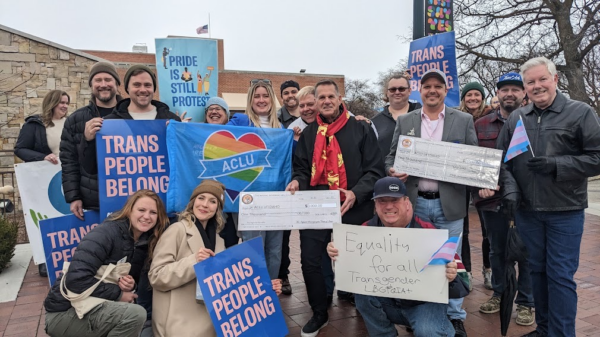
Six transgender residents of Idaho filed a lawsuit in federal court challenging HB 752, a 2026 state law prohibiting them from using sex-designated public restrooms consistent with their gender identity. The lawsuit argues HB 752 violates their constitutional rights to due process, equal protection, and privacy.
The challenge was brought by the American Civil Liberties Union, ACLU of Idaho, and Lambda Legal.
About House Bill 752
HB 752, signed into law by Idaho Gov. Brad Little earlier this year, makes the first offense a misdemeanor with up to one year in prison, and a second offense a felony with up to five years in prison. It applies to all government-owned buildings and private businesses that are open to the public, such as libraries, rest stops, airports, malls, gas stations, restaurants, entertainment venues, hospitals, and other businesses.
The Idaho Fraternal Order of Police (FOP) and the Idaho Chiefs of Police Association opposed HB 752, noting there is no “clear or reasonable way” to determine a person’s sex at birth during a field contact without engaging in “invasive and inappropriate” questioning or searches.
Analyses of public safety data have found that policies inclusive of transgender people’s access to public accommodations have no impact on rates of harassment or violence, but policies restrictive of their access have increased transgender people’s already heightened risks for harassment and violence. Transgender people are four times as likely as their cisgender counterparts to be victimized by violence.
Nine states and Puerto Rico ban transgender people from using restrooms consistent with their gender identity in government buildings and 12 others have similar laws applying to K-12 public schools. Idaho’s H.B. 752 is the only state law applying to private businesses and – of the three states with criminal penalties attached to their bans – carries the steepest criminal charges in terms of prison sentences for violations.
Sep 8, 2026
Rodriguez v. Porter
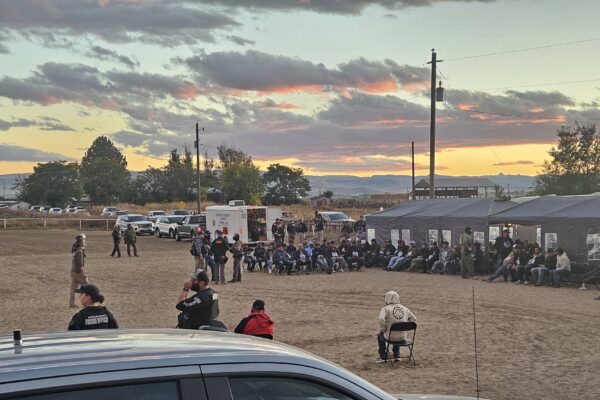
On February 10, 2026, the American Civil Liberties Union Law Reform Project, the ACLU of Idaho, and Wendy J. Olson, former U.S. Attorney for the District of Idaho, and partner at Stoel Rives, filed a putative class action lawsuit challenging an immigration raid carried out at a popular family event in Wilder, Idaho on October 19, 2025.
This lawsuit challenges the actions of 200 law enforcement agents who swarmed a family-friendly horse racing event, violently detaining more than 400 people, including children and babies, for hours, many of whom sustained injuries at the hands of agents. The defendants were sent to Wilder to carry out a warrant for five individuals suspected of the nonviolent crime of gambling without a license.
We argue that what occurred was an excessive use of force that went far beyond the criminal investigation allowed in the warrant, resulting in the unreasonable detention of hundreds of attendees, violating their Fourth Amendment rights.
The lawsuit was brought on behalf of three Latino families who are U.S. citizens or lawful permanent residents. This is the first major challenge in the second Trump administration to ICE tactics that discriminate based on ethnicity.
What Happened in Wilder
In October 2025, more than 200 federal, state, and local law enforcement officers descended on the La Catedral arena with armored trucks and helicopters, flashbang grenades, and guns drawn, detaining approximately 400 spectators – including U.S. citizens and children – for four hours of detention in inhumane conditions.
They shoved compliant people to the ground, forcibly dragged people out of their cars, shot rubber bullets, and threw flashbang grenades into cars that had people sitting inside. Parents and children were zip-tied at gunpoint, and agents subjected people to hours of violent and degrading treatment.
This lawsuit is about securing justice for those harmed to ensure such a horrific violation of civil rights is never repeated in Idaho and demanding accountability from local, state, and federal law enforcement.
All Cases
25 Court Cases
Jul 2, 2026

Hecox v. Little
Hecox v. Little was filed in 2020 to affirm the rights of Idaho's trans and intersex community to participate in school sports.
Jan 10, 2026
IORC v. Labrador
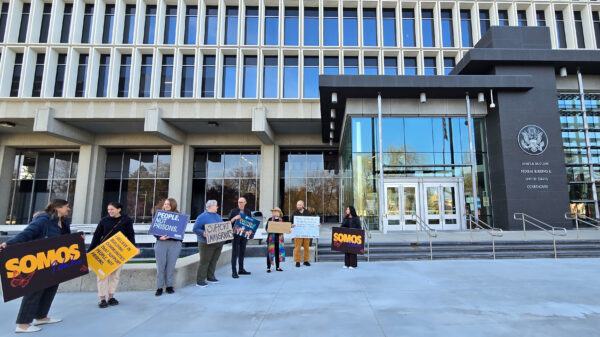
IORC v. Labrador was filed in 2025 to stop the Idaho legislature from circumventing federal immigration enforcement.
Dec 20, 2025

Tucker v. State of Idaho
A decade-long legal battle defending Idahoans' Sixth Amendment right to a constitutional public defense system.
Dec 6, 2025

Robinson v. Labrador
Robinson v. Labrador was filed in 2024 to protect access to gender-affirming medical care in Idaho prisons.
Nov 25, 2025

K.W. v. Armstrong
K.W. v. Armstrong was filed in 2012 to give adults with intellectual and developmental disabilities in Idaho a fair chance.
Nov 25, 2025

Planned Parenthood Great Northwest, Hawai'i, Indiana, Kentucky v. Labrador
Health care providers and advocates defend doctors' right to counsel patients on accessing out-of-state abortion care.


Stay Informed
Sign up to be the first to hear about how to take action.
By completing this form, I agree to receive occasional emails per the terms of the ACLU’s privacy statement.
By completing this form, I agree to receive occasional emails per the terms of the ACLU’s privacy statement.