
Reproductive Freedom
Reproductive freedom is essential in the fight for gender equity. The ACLU of Idaho believes all people should have access to reproductive health care regardless of race, income, gender identity, or zip code.
What you need to know
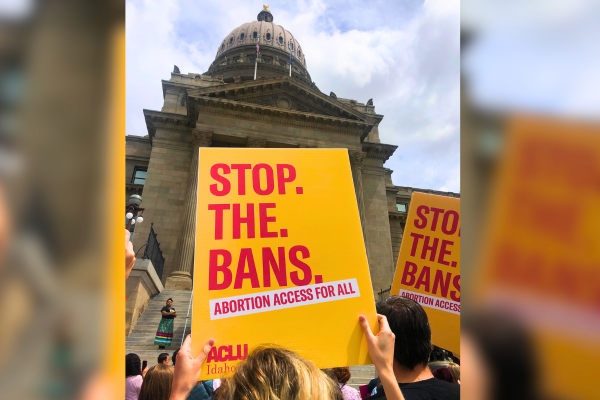
Abortion is completely banned in Idaho.
There are only two exceptions to Idaho’s extreme abortion law: when the pregnancy threatens the life of the pregnant person or is the result of rape or incest.
Idaho lawmakers are actively working to roll back even more reproductive rights.
We are fighting escalating attacks on bodily autonomy, including attempts to remove the current, limited abortion exceptions.
Many lawsuits are challenging Idaho’s abortion laws.
We are tracking these closely and will continue updating this page with the most recent information.
Our Reproductive Freedom Work
The ACLU of Idaho advocates for reproductive freedom — work rooted in the constitutional right to individual autonomy and safeguards against political interference in health care decisions.
Our reproductive justice work in the statehouse, courts, and with the community aims to restore access to health care services and information for all Idahoans. We are committed to building a future where health care decisions are made between Idahoans and their providers, without interference or coercion from the government. Learn more about the state of reproductive freedom in Idaho below.
The patchwork and ever-changing landscape of abortion access in Idaho harms all of us, including our health care providers:
- Idaho has lost more than a third of practicing obstetricians since the extreme abortion laws took effect.
- Three rural hospitals have shuttered their labor and delivery units since 2020, while many other units across the state face substantial staffing shortages and a hostile political climate.
Overview of Idaho’s Abortion Laws
In Idaho, abortions, at any stage of pregnancy, are illegal except when the pregnancy threatens the life of the pregnant person or is the result of rape or incest. Rape and incest exceptions only apply during the first trimester of pregnancy.
A total of five lawsuits — and over a dozen pieces of legislation — have shaped Idaho’s reproductive rights landscape since the overturning of Roe v. Wade with the Dobbs v. Jackson Women’s Health Organization case in 2022. While cases make their way through the courts, legislators continue introducing laws that further restrict abortion access, and advocates continue finding ways to restore access; we can expect ongoing shifts in reproductive rights law.
Idaho’s Total Abortion Ban
Abortion is completely banned in Idaho, with very narrow exceptions. The ban applies to adults and youth and allows individuals to sue abortion providers. Helping a person under the age of 18 get an out-of-state abortion is a felony. If someone under 18 needs a legal abortion (ex: in the case of rape or incest) in Idaho, parental consent is required.
Before receiving a legal abortion, people in Idaho must undergo a mandatory, 24-hour waiting period and anti-abortion “counseling.” Public funding and private insurance cannot fund abortions in the state. Idaho’s abortion ban also allows close family members to sue health care providers for performing abortions and guarantees a $20,000 minimum award for successful cases.
Legal Challenges to Idaho’s Abortion Laws
In 2025, a court ruling clarified vague language about health exceptions in Idaho’s abortion law, specifically, that abortion is allowed in Idaho when the pregnancy involves complications and health conditions that endanger the life of the pregnant person. Health care providers cannot be prosecuted for providing care in these instances.
Serious mental health conditions, whether life-threatening or not, are not a legally justifiable exemption to Idaho’s abortion ban. Pregnancies with a fatal fetal diagnosis are also not exempt, meaning Idaho law forces people to carry unviable fetuses to term unless or until the pregnancy becomes life-threatening.
A separate lawsuit sought to protect emergency treatment, including abortion care, through a challenge to Idaho’s extreme abortion ban. Initially brought by the Biden Administration against Idaho in 2022 (Idaho and Moyle, et al. v. United States), the lawsuit was dismissed in early 2025. As a result, Idaho hospitals are not required by federal law to provide the abortions necessary to stabilize a patient’s health.
However, the issue of emergency treatment exceptions and Idaho’s abortion ban is not legally settled just yet. A temporary court order, prompted by yet another lawsuit (St. Luke’s Health System, LTD. v. Labrador) allows certain Idaho doctors to provide stabilizing care in emergency situations. That means health care providers at St. Luke’s cannot be prosecuted when providing abortions as part of emergency medical care.
Similarly, a recent legal decision blocks certain components of Idaho’s 2024 travel ban, which makes assisting a minor access out-of-state abortion a felony. While assisting in travel is still a crime, providers are allowed to counsel or otherwise inform patients under 18 about out-of-state abortion care options.
The Future of Reproductive Freedom in Idaho
Our fight to claw back reproductive freedom in Idaho is far from over. In recent years, lawmakers have staged ever-more extreme attacks on bodily autonomy, including attempts to remove exceptions for rape and incest and to give full personhood rights to fetuses.
We know criminalizing health care and providers is dangerous and we will continue to work toward an Idaho where individuals – and not the government – have control over their own bodies and the power to determine their own futures.
2025 Legislative Session: Reproductive Rights
The Latest


ACLU Brief in Emergency Abortion Care Case Disputes Idaho Politicians' Flawed Legal Arguments

Take Action
Today, years of hard-fought civil liberty protections are under threat.
To influence lawmakers, we need everyone to get involved.


Stay Informed
Sign up to be the first to hear about how to take action.
By completing this form, I agree to receive occasional emails per the terms of the ACLU’s privacy statement.
By completing this form, I agree to receive occasional emails per the terms of the ACLU’s privacy statement.