News & Commentary


Idaho State Lawmakers Attempt to Block Cities from Banning LGBTQ+ Discrimination


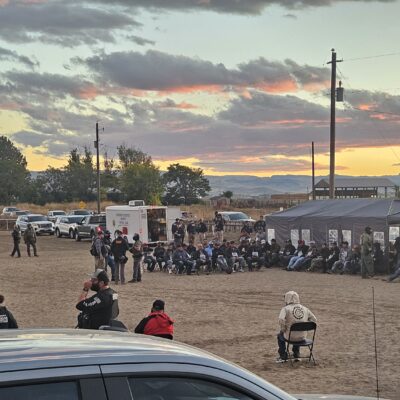
ACLU OF IDAHO SENDS LETTER TO IDAHO SECRETARY OF STATE OVER VOTER INTIMIDATION
BOISE—The ACLU of Idaho sent a letter to the Idaho Secretary of State’s Office demanding that signs posted at polling locations in Madison County be removed because they violate the First and Fourteenth amendments in addition to section 11(b) of the Voting Rights Act, which protects against voter intimidation. The organization also demanded that the same information which exists on the Secretary of State’s voting website be removed as well. The signs and webpage, which directly target students, assert that there “is no federal right to vote anywhere in the United States for the office of President” and create confusion regarding the rights of students to register and vote.“The signs posted by Madison County election officials raise serious legal issues regarding voter intimidation directed at one specific group

ACLU of Idaho Statement on Middleton School Teachers' Costumes
Every student—regardless of race, color, national origin, religion, gender, gender identity, sexual orientation, or disability—should feel safe and welcome in our public schools. Indeed, federal and state laws safeguard our students from discrimination, intimidation and harassment based on many of the same protected characteristics.
ACLU Idaho, Planned Parenthood and Ferguson Durham PLLC Files Lawsuit Against Idaho Over Invasive Abortion Reporting Regulations
Idaho Continues to Place Unprecedented Barriers on Reproductive Health Care Across the State
Judge Orders Idaho Prison Officials to Disclose Secret Lethal Injection Records
Boise--On Monday a Fourth District judge ordered Idaho prison officials to disclose lethal injection records they had previously sought to keep secret regarding the drugs used in Idaho’s two most recent executions.

COURT APPROVES CLASS ACTION STATUS FOR ACLU PUBLIC DEFENSE LAWSUIT
BOISE—Idaho’s Fourth Judicial District Court ruled yesterday that an ACLU lawsuit challenging the State’s failure to adequately fund and support Idaho’s defective public defense system can go forth as a class action. The ruling is a landmark victory for Idaho plaintiffs and plaintiffs around the country. The ruling ensures that the impact of the lawsuit will extend beyond the four named plaintiffs and affect tens of thousands of Idahoans and their families who are unable to afford a criminal or juvenile defense lawyer every year. Under the court’s ruling anyone in Idaho with a pending charge against them and who cannot afford an attorney is now a part of the class action.“This is a tremendous decision in protecting the Sixth Amendment right to adequate legal representation for all Idahoans,” said ACLU of Idaho Executi

Federal Appeals Court Strikes Down Provisions of Idaho’s Ag-Gag Law in Precedent-Setting Victory for Animals, Workers, Free Speech
SAN FRANCISCO – Today the United States Court of Appeals for the Ninth Circuit became the first federal appellate court to strike down provisions of an Ag-Gag law, holding that Idaho’s ban on recording conditions at factory farms and slaughterhouses violates the First Amendment. This victory for free speech comes in a lawsuit filed in 2014 by a coalition of public interest groups and journalists led by the Animal Legal Defense Fund.Today’s decision states that Idaho’s law is “staggeringly overbroad, and that the purpose of the statute [is], in large part, targeted at speech and investigative journalists.”

Idaho Public Defense Commission seeking comment on 2018 rules
The Idaho Public Defense Commission is creating rules that will set the standards for public defense in Idaho, including rules pertaining to investigations, use of experts, parity in investigators, experts, and testing resources between public defenders and prosecutors, and qualifications for public defenders who work on death penalty cases. The rules also include a new enforcement standard that outlines how the Commission will hold counties accountable to meeting the standards and other rules. These rules will be discussed throughout the month of October and then sent to the Idaho Legislature for approval in early 2018. The Commission needs to hear directly from people who are dealing with Idaho's public defense system, whose stories and experiences can play a big role in fixing that system. If you’re interested in providing feedback and want more information about the rules creation process, review our 2017 Public Defense Commission Rules guide here.
Stay Informed
Sign up to be the first to hear about how to take action.
By completing this form, I agree to receive occasional emails per the terms of the ACLU’s privacy statement.
By completing this form, I agree to receive occasional emails per the terms of the ACLU’s privacy statement.