Subscribe to the Free Future Newsletter
When ICE agents swarmed a man in the parking lot of Downey Memorial Christian Church in Los Angeles, the church pastor told the officers that they didn’t have permission to be on church property. When they wouldn’t leave or show her any identifying information, she pulled out her phone to record the arrest. In response, an agent pointed a gun at her. Days later, while a man was videorecording a raid outside a Home Depot, DHS agents tackled him to the ground, arrested him and held him in detention for more than twenty-four hours.
These aren’t isolated incidents. Across the country, masked, armed federal agents in combat gear are snatching people from homes, workplaces, parks, and places of worship — and attacking those who attempt to film or document their activity.
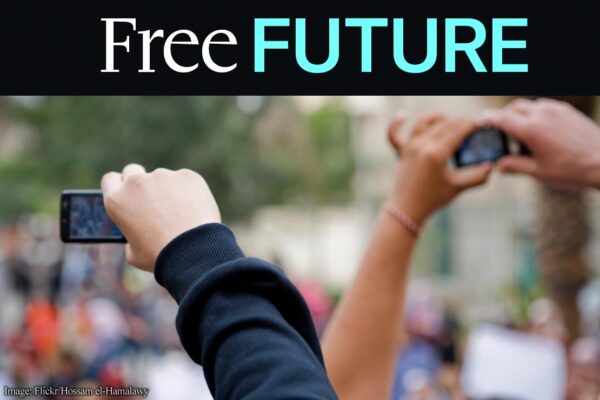
The First Amendment protects the right to record and disseminate footage of law enforcement officers carrying out their official duties in public — that includes ICE, CBP and any other officers engaged in immigration enforcement activity.
Yet in an apparent attempt to cover up their abuses, DHS is systematically attacking the right to record their agents at work.
That’s why we’ve filed a FOIA request for DHS records concerning people who record, livestream, or publicize immigration raids and arrests. We want to uncover relevant agency records — such as policy directives, training materials, legal analyses, and communications — to learn how the agency side steps the First Amendment right to record, how it’s instructing its agents to respond to cameras in the streets, and how widespread its retaliatory pattern is.
High-level Trump administration officials have already indicated that they consider the recording of immigration agents to be a threat rather than a right. At a July 2025 press event, DHS Secretary Kristi Noem declared that “violence” includes “anything that threatens [DHS agents] and their safety. It is doxing them. It is videotaping them where they’re at.”
DHS Assistant Secretary for Public Affairs Tricia McLaughlin later reinforced this characterization of filming agents, telling reporters that “videotaping ICE law enforcement and posting photos and videos of them online is doxing our agents . . . . We will prosecute those who illegally harass ICE agents to the fullest extent of the law.”
On the other hand, DHS agents are recording their own interactions during raids, posting on social media, and providing exclusive access to reporters that support Trump’s anti-immigrant agenda.
The administration has self-interested reasons to suppress community recordings of immigration raids. Bystander recordings of law enforcement have proven critical to uncovering abuses and holding the government accountable, from footage of police brutalizing Rodney King in 1991 to the video of Derek Chauvin murdering George Floyd in 2020. Independent documentation can also be crucial to track and provide legal support to detained people and to counter government lies about law enforcement incidents. Video recordings of recent immigration arrests have served all of these purposes, which is why we must urgently defend this fundamental First Amendment right.
Despite what the Trump administration wants us to think, we have the right to know what immigration enforcement agents are doing — from internal directives to abuses on the streets. We’re demanding transparency from the ground up, to bring us closer to accountability, justice, and safety for all who call this country home.